
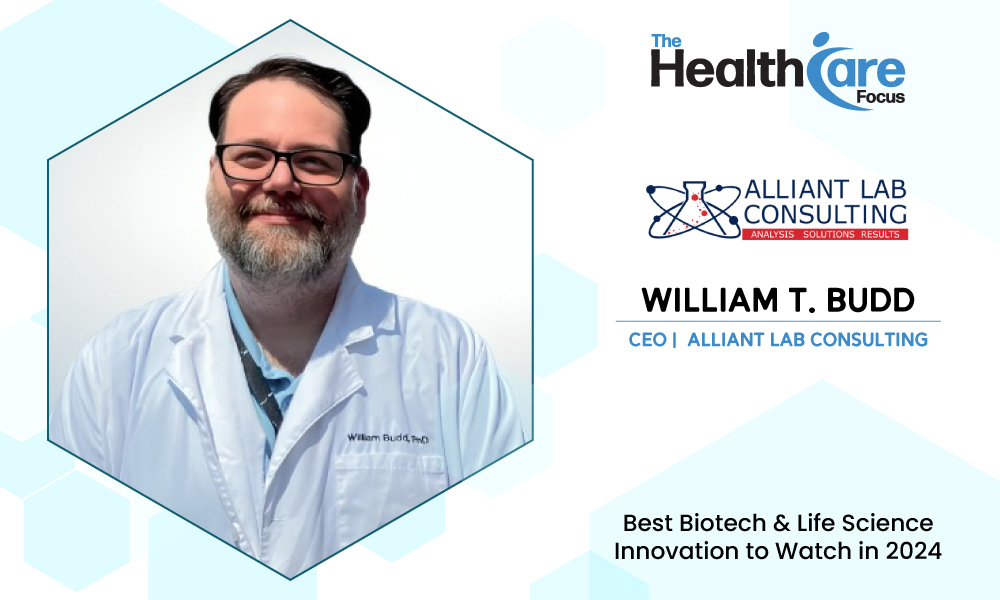
Before becoming a CEO and scientist, William T. Budd built his career in high-pressure environments as a firefighter and critical care paramedic. Working on the front lines, he treated critically ill and severely injured patients where every second mattered.
During these experiences, he noticed something profound—the human body’s own defense systems, designed to protect, could sometimes worsen a patient’s condition during extreme stress. This observation sparked a deep curiosity about how biological systems function and fail.
Transition into Science and Research
Driven by these questions, Budd shifted from emergency medicine to scientific research. At Virginia Commonwealth University (VCU), he earned:
- Master’s degree in Bioinformatics (2010)
- PhD in Integrative Life Sciences (2012)
His research focused on molecular biology, especially cancer progression. He studied microRNAs and their role in tumor development and metastasis, adopting a systems biology approach—understanding disease as a network failure rather than a single issue.
Building Solutions: CEO of Alliant Lab Consulting
In 2022, Dr. Budd became CEO of Alliant Lab Consulting, aiming to solve inefficiencies in clinical laboratories.
The company provides end-to-end lab solutions, including:
- Laboratory test validation
- Equipment setup and optimization
- Workflow improvement
- Laboratory information systems implementation
- Regulatory compliance support
- Revenue cycle management
- Custom assay development and go-to-market strategy
Alliant acts as a bridge between laboratories, manufacturers, and healthcare providers, helping them operate efficiently and scale effectively.
Measuring Real Impact
Dr. Budd focuses on measurable outcomes rather than abstract success. His work is evaluated through:
For Clinical Labs
- Reduced test turnaround time
- Faster treatment decisions
- Increased in-house testing capabilities
For Business Partners
- Growth in product adoption
- Improved clinical performance
- Increased revenue
This data-driven mindset ensures real-world impact across healthcare systems.
Leadership During Crisis
Budd’s leadership philosophy was shaped during a major crisis when a company he worked with lost funding, resulting in over 300 layoffs.
He led the shutdown process while motivating a small team to stay and help—despite uncertainty about compensation. This experience reinforced a key leadership principle:
Strong leadership is proven during difficult times, not easy ones.
His ability to inspire trust under pressure remains one of his defining strengths.
Contribution During COVID-19 Pandemic
One of Dr. Budd’s most significant achievements came during the early days of COVID-19.
- Developed and validated a PCR test by February 2020
- Delivered same-day results when others took up to 7 days
- Scaled testing to handle over 3,000 samples efficiently
- Helped establish drive-through testing centers
Later, his team also developed assays to detect COVID-19 variants in real time, providing crucial insights for treatment and public health decisions.
The Future: AI in Healthcare
Dr. Budd is particularly excited about the role of artificial intelligence in clinical labs. He envisions systems that:
- Identify care gaps automatically
- Assist clinicians with decision-making
- Improve diagnostic speed and accuracy
He is also exploring growth in direct-to-consumer testing, where patients can access diagnostic tools from home.
Leadership Philosophy and Work-Life Balance
Despite handling complex challenges, Budd prioritizes balance by taking regular breaks to recharge.
His leadership style combines:
- Scientific thinking
- Practical execution
- Mentorship and team development
He finds fulfillment in guiding young scientists and helping them connect theory with real-world applications.
Conclusion
William T. Budd’s journey—from emergency response to molecular science and business leadership—demonstrates how diverse experiences can shape innovative thinking.
His core belief remains simple yet powerful:
Understanding complex systems is the first step toward fixing them.
Through science, leadership, and innovation, he continues to transform the clinical laboratory landscape.