

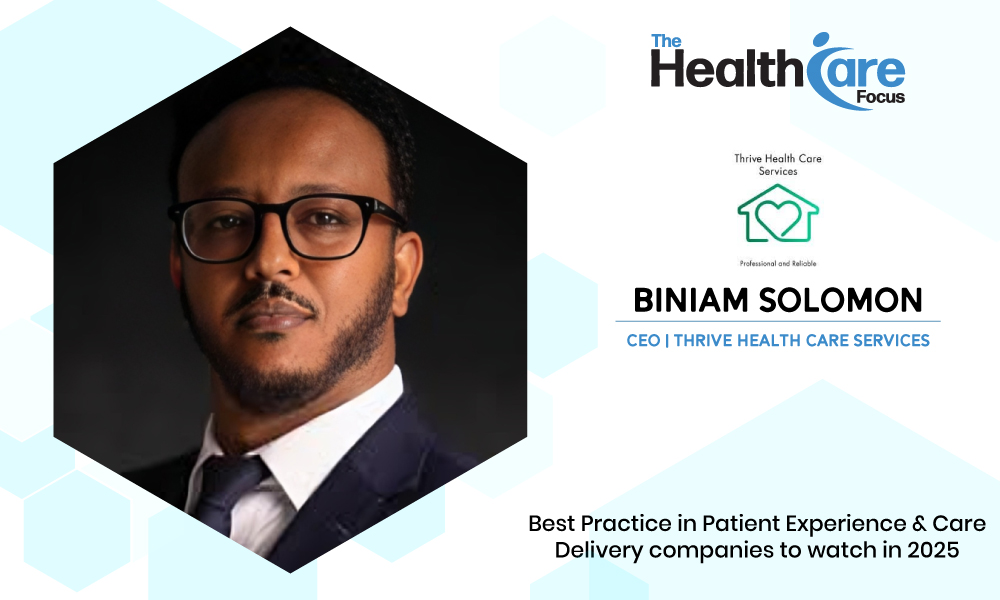
Biniam Solomon, Co-Founder and CEO of Thrive Health Care Services, is redefining how healthcare is delivered beyond hospital walls. His mission is simple but powerful: ensure families—especially those with medically complex children—receive the same quality of care at home as they would in a hospital.
Solving a Critical Gap in Healthcare
For many families, the most challenging moment comes after hospital discharge. While hospitals provide advanced care, support at home is often limited. This gap can leave parents overwhelmed and patients vulnerable.
Recognizing this issue, Solomon built Thrive Health Care Services to bridge the transition from hospital to home—ensuring continuity of care, safety, and support for families managing complex medical needs.
From Ethiopia to U.S. Healthcare Leadership
Solomon’s journey began in Ethiopia, where access to healthcare was limited. These early experiences shaped his understanding of how critical healthcare systems are to families.
After moving to the United States, he gained experience across clinical and administrative roles. He later founded Nova Nursing Academy, where he developed deep expertise in training healthcare professionals—knowledge that became foundational in building Thrive.
Specialized Care for High-Acuity Patients
Unlike many agencies, Thrive focuses on high-acuity, medically complex patients, including those requiring:
- Ventilator support
- Tracheostomy care
- G-tube feeding
- IV therapy
The organization provides:
- Private duty nursing
- Skilled nursing visits
- Personal care services
A key differentiator is Thrive’s in-house training facility, where clinicians receive hands-on training using real medical equipment—ensuring they are fully prepared before entering patients’ homes.
Addressing the Healthcare Workforce Challenge
The shortage of skilled nurses is one of the biggest challenges in home healthcare. Solomon addresses this by investing heavily in:
- Continuous training and education
- Clinical mentorship programs
- Career growth opportunities
His philosophy is clear: when healthcare professionals feel supported and valued, they stay—and patient care improves.
Scaling Without Compromising Quality
As demand grew, Thrive faced a major challenge: scaling operations while maintaining high standards. Instead of prioritizing rapid expansion, Solomon focused on:
- Strengthening clinical training programs
- Hiring experienced RN case managers
- Expanding payer partnerships with major insurers
- Implementing technology for operational efficiency
This disciplined approach ensured sustainable growth without sacrificing care quality.
Accreditation and Hospital Partnerships
Thrive earned accreditation from The Joint Commission, receiving the Gold Seal of Approval—one of the highest standards in healthcare quality and safety.
This recognition strengthened partnerships with leading hospitals, which now trust Thrive with their most medically fragile patients.
Improving Patient Experience at Home
Thrive’s care model focuses on making the transition from hospital to home seamless:
- Pre-discharge coordination with hospitals
- Home safety assessments
- Family training on medical equipment
- Immediate nurse support upon discharge
This approach ensures families feel supported, not overwhelmed.
Changing Perceptions of Home Healthcare
A common misconception is that home care is less effective than hospital care. Solomon challenges this by highlighting:
- Higher patient satisfaction at home
- Significantly lower costs (up to 90% less)
- Improved quality of life for patients
His belief: patients heal better in familiar environments.
Expansion and Future Vision
Thrive has expanded into Washington, D.C., continuing its mission to provide high-quality care across the Mid-Atlantic region.
Solomon’s growth strategy is clear:
- Hire skilled clinicians
- Invest in training
- Earn trust and accreditation
- Scale responsibly
Leadership Philosophy
At the core of Solomon’s leadership is a simple principle:
“Build something you would trust with your own family.”
This philosophy drives every decision at Thrive—from hiring to patient care—ensuring the organization maintains its commitment to excellence.
Conclusion
Biniam Solomon is transforming home healthcare by bringing hospital-level care directly into patients’ homes. Through innovation, training, and a patient-first approach, Thrive Health Care Services is setting a new standard for treating medically complex patients outside traditional clinical settings.
His work not only improves healthcare delivery but also provides families with something invaluable—confidence, support, and peace of mind.