
The most important advances in surgery are not always the ones patients can see.
A patient may never see the vial scanned before a medication is prepared. They may never see the syringe label that carries the drug identity forward. They may never know whether the exact NDC was preserved after the vial was discarded, whether the administration was documented in the anesthesia record, or whether controlled substance waste was recorded while the anesthesia provider was still in the room.
But in the operating room, those moments matter. They are fast, often invisible steps in a high-pressure environment where accuracy, timing, and accountability have to work together. For more than four decades, Codonics has built medical technology around that reality. Its approach is simple and demanding: respect the operating room, reduce complexity, and make the safe thing easier to do.
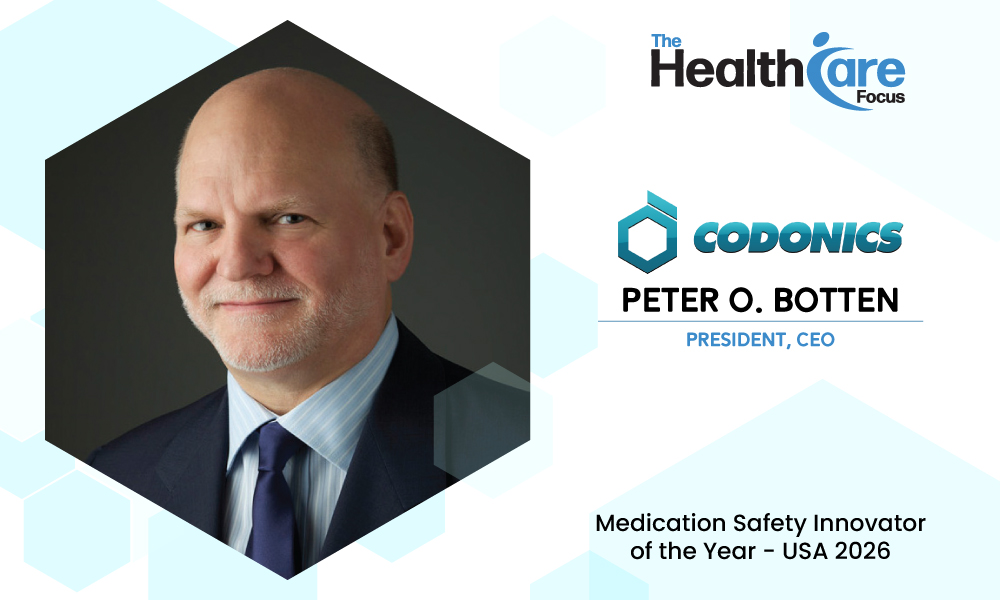
That philosophy is why Codonics is being recognized as Medication Safety Innovator of the Year 2026. The company is not chasing innovation for its own sake. It is addressing one of the most difficult medication safety challenges in healthcare: bringing structure, visibility, and consistency to the perioperative medication workflow without slowing anesthesia providers down.
From a Label to a Platform
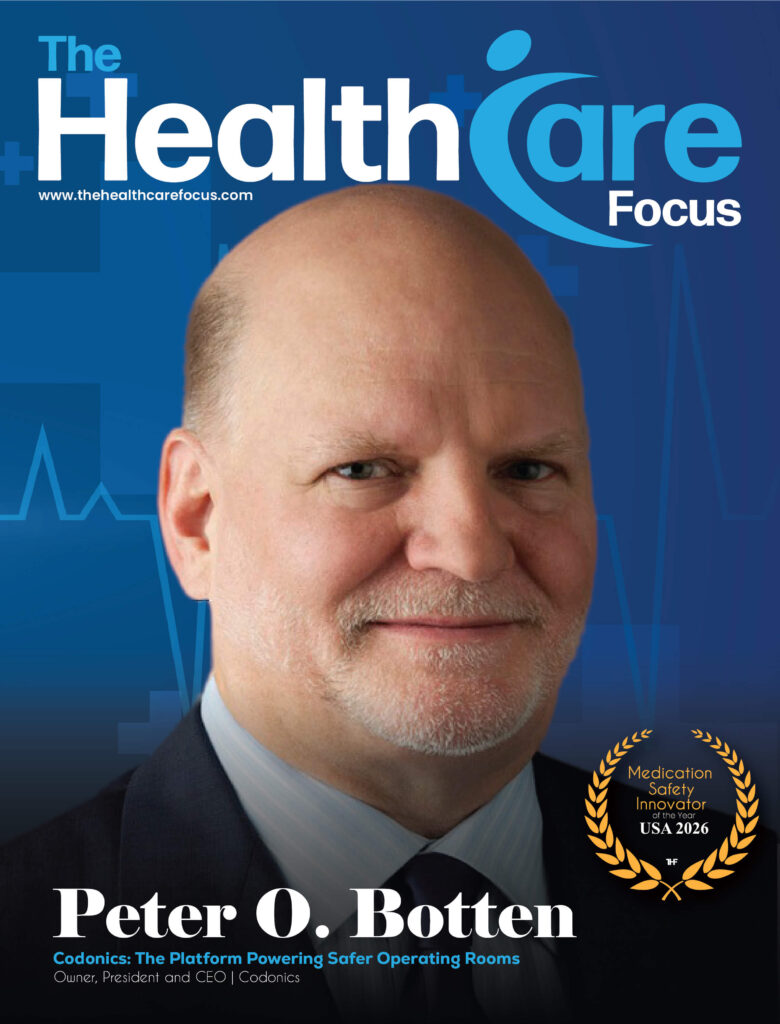
Codonics was founded in 1982 by Owner, President and CEO Peter O. Botten and first established its reputation in medical imaging, including the introduction of the world’s first DICOM radiology printer in 1996. That engineering foundation, combined with U.S.-based manufacturing, FDA registration, ISO 13485 certification, and close alignment between design, production, regulatory, quality, and service, shaped the discipline that still defines the company today.
Over time, Codonics applied that same discipline to one of the most variable and high-risk areas in the hospital: medication use in the operating room. Unlike many areas of care, the OR requires anesthesia providers to prepare, administer, document, and manage medications in a dynamic environment where time is limited and interruptions are constant. Historically, many of those steps relied on manual processes, site-specific practices, memory, and handwritten labels.
The Codonics Safe Label System® (SLS) changed that workflow. Massachusetts General Hospital (MGH) invented the foundational SLS technology and licensed it to Codonics. Codonics then innovated, engineered, refined, commercialized, and brought SLS to market as a scalable, FDA-cleared Class II medical device purpose-built for the operating room.
SLS was developed to help reduce the three most common medication errors made in the operating room: vial/ampoule swaps, mislabeling or illegible labeling, and syringe swaps. At preparation, the anesthesia provider scans the vial or ampoule barcode. SLS electronically verifies the drug’s identity and concentration using barcode data from the NDC or other drug vial UDI barcodes, provides visual and audible safety checks, and prints a standardized, full-color, TJC-compliant syringe label in seconds.
The workflow is intentionally simple and serial: one vial, one syringe, one label. That simplicity is the innovation. SLS gives anesthesia providers a second set of eyes during preparation while also bringing pharmacy insight to the OR through a pharmacy-controlled formulary and standardized labeling rules.
The Data That Disappears

SLS also solves a less visible but highly important data problem. Once a medication is drawn into a syringe, the original vial or ampoule is typically discarded. When that happens, the exact National Drug Code (NDC) can be lost forever unless it was captured at preparation and carried forward through the workflow.
For many hospitals, and especially for 340B hospitals, that missing NDC creates a major documentation and charge capture gap. The medication may still be administered correctly, but the exact source data needed for billing integrity, 340B accountability, and downstream documentation may no longer be available. SLS preserves that critical information by capturing the exact NDC at preparation and embedding medication identity and concentration — plus the dilution and diluent, if required; the date and time of preparation; the date and time of expiration; the preparer’s initials; and any medication-specific alerts — into the barcode on the syringe label.
That label becomes more than a syringe label. It becomes the link between preparation and the rest of the medication-use process.
Extending Safety to Administration
Codonics extended that connection with SLS-WAVE, a highly optimized barcode scanner that supports documentation at the point of administration. When the SLS-prepared syringe label is scanned, SLS-WAVE helps carry medication information, including the exact NDC captured at preparation, electronically into AIMS/EHR systems such as Epic and Cerner in a ‘hands-free’ workflow.
For anesthesia providers, this helps reduce manual documentation burden and improves the timing and accuracy of the anesthesia record. For pharmacy and hospital operations, it supports documentation integrity, charge capture, 340B initiatives, and a more complete medication record. It also reflects the direction healthcare is moving: away from standalone tasks and toward connected, workflow-based data capture.
Preparation now informs administration. The drug identity established at the vial can follow the syringe into the patient record at administration. But one important step still remained difficult, manual, and often disconnected from the rest of the workflow: controlled substance waste.
The Blind Spot at the End of the Case
Controlled substance waste has long been one of the most challenging parts of the anesthesia medication workflow. At the end of a case, the anesthesia provider must waste any remaining liquid controlled substance and document that event appropriately. Pharmacy teams must later review dispensing, administration, and waste documentation to support reconciliation. When information does not align, follow-up often happens after the case, sometimes days later, when the provider is being asked to reconstruct details from memory.
The burden is not only on pharmacy. It is also on anesthesia providers, who want to complete the right process efficiently and move safely to the next case. Codonics recognized that this was not a problem to solve with a bigger stick. It was a workflow problem that required bringing pharmacy and anesthesia teams together around better information, captured at the right moment.
That insight led to the Codonics Safe Waste System™ (SWS), the innovation recognized with a 2026 TAG Award for Medication Safety & Compliance Innovation. SWS is currently being commercialized, with expected release in Q4 2026. It is an FDA-listed Class I Exempt medical device classified as a clinical spectrophotometer for pharmaceutical analysis and is designed to operate in conjunction with SLS, extending the structured medication workflow from preparation and administration into controlled substance waste, while maintaining a distinct role within the perioperative workflow.
Capturing the Record While the Provider Is Still in the Room
SWS is designed to support controlled substance waste handling at the point of care, in the OR/anesthesia workspace, while the anesthesia provider is still in the room. Rather than relying on delayed reconstruction, SWS supports a traceable workflow built around six functions: Identify → Measure → Assay → Waste → Witness → Record/Report.
As part of the waste workflow, SWS supports identification, measurement, spectrophotometric analysis, waste handling, witness documentation, and record/report capture. The resulting waste event record includes data that can support pharmacy review and reconciliation processes, including drug identity, volume, user, witness, and assay-related information.
This is a meaningful shift. SWS does not ask anesthesia providers to work around technology; it is designed to make the correct waste process part of the point-of-care workflow. It does not position pharmacy as a distant overseer; it brings pharmacy insight to the OR by making the waste event more visible, structured, and reviewable. And it captures the data needed to support downstream pharmacy review and reconciliation processes.
That distinction matters. The innovation is not simply that SWS measures or assays waste. The innovation is when and where the information is captured: at the point of care, before the details of the case are lost to time.
Innovation That Works Because It Fits
Codonics’ strength has always been practical innovation. The company listens to anesthesia providers, pharmacists, medication safety leaders, IT teams, biomedical engineering, and hospital administrators to understand where workarounds exist and where safety gaps remain unresolved. Those conversations have shaped the evolution of SLS, SLS-WAVE, and SWS.
The company’s culture is built around a simple operating belief: great products are built by great teams working closely together. Engineering, product management, regulatory, quality, manufacturing, service, sales, and marketing must all understand the customer and the workflow. In MedTech, a good idea is only the beginning. The product must be meaningful at the point of care, technically reliable, manufacturable, supportable, regulatory-aligned, and trusted over time.
That is why Codonics focuses on standardization without slowdown. A device may be technically impressive, but if it interrupts the anesthesia workflow, adds cognitive burden, or creates extra steps, it will not be used consistently. Codonics designs its technologies to support the work already happening in the OR and to make the correct action easier to perform.
One Platform Powering Safer Operating Rooms
Today, the Codonics Safe Label System is used in more than 16,400 operating rooms across more than 1,100 hospitals, supporting hundreds of millions of medication preparations. The scale of that adoption reflects the company’s ability to solve real problems in real clinical environments.
What began with a label has become one platform powering safer operating rooms. Through SLS, Codonics supports medication preparation. Through SLS-WAVE, it supports administration documentation. Through SWS, it is advancing controlled substance waste handling and the capture of data for reconciliation. Together, these technologies bring structure, visibility, and consistency across a workflow that has historically been fragmented: Preparation → Administration → Waste & Data for Reconciliation.
For hospitals, that means more complete data, stronger documentation, and better alignment between anesthesia and pharmacy teams. For anesthesia providers, it means practical tools that respect the pace and pressure of the operating room. For patients, it means additional safeguards built into the moments they may never see but always depend on.
In healthcare, innovation only matters when it improves what happens in the moments that matter most. Codonics has built its recognition as Medication Safety Innovator of the Year 2026 by focusing on exactly those moments—where every scan, every label, every administration, and every waste event can help make perioperative care safer, smarter, and more accountable.
Regulatory Positioning Note
Codonics Safe Label System (SLS) is an FDA-cleared Class II medical device intended for automatic verification of drug identity using barcode data from NDC and other drug vial UDI barcodes. SLS enables creation of ISO 26825/ASTM 4774 color-coded labels in alignment with TJC-MM and ISMP guidance. The Codonics Safe Waste System™ (SWS) is an FDA-listed Class I Exempt medical device classified as a clinical spectrophotometer for pharmaceutical analysis. SWS is designed for controlled substance waste handling at the point of care and captures data to support pharmacy review and reconciliation processes.
Address: 17991 Englewood Drive Middleburg Heights, Ohio 44130 USA