

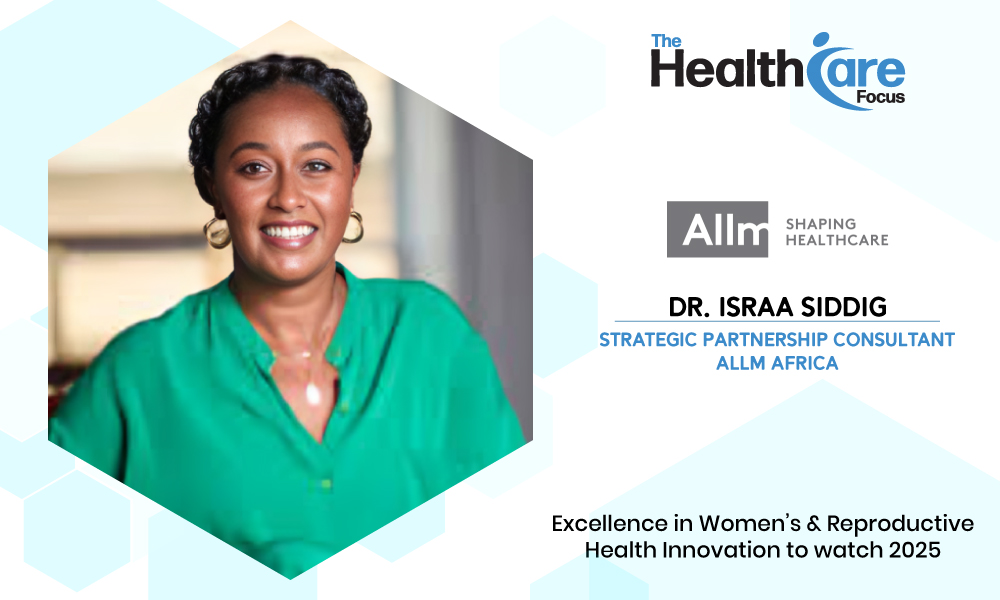
Dr. Israa Siddig is a leading voice in global health innovation, working at the intersection of medicine, technology, and policy to build resilient healthcare systems across Africa. With over 15 years of experience in OB/GYN and a Master’s in Global Health Policy, she is redefining how healthcare solutions are designed and delivered in underserved regions.
From Sudan to Global Health Leadership
Born in Sudan, Dr. Siddig was inspired by two powerful influences—her father, a dedicated obstetrician, and the harsh realities of limited healthcare access in her homeland. Her journey took a turning point during her medical training in London, where she encountered the clinical realities of Female Genital Mutilation (FGM).
This experience reshaped her purpose—from practicing medicine to transforming the healthcare systems that allow such disparities to persist.
Addressing Gaps in Women’s Healthcare
Dr. Siddig recognized that global healthcare systems often overlook the social and cultural factors affecting women’s health. She emphasizes that social determinants such as income, education, and geography directly impact patient outcomes.
Her mission is to make invisible health challenges visible, particularly in women’s healthcare, where systemic gaps still exist worldwide.
From Clinical Practice to Health Innovation
Breaking away from traditional career paths, Dr. Siddig transitioned from hospital-based medicine into global health strategy, digital health, and AI-driven healthcare solutions. She has worked with organizations like the World Health Organization, contributing to large-scale health programs and digital learning initiatives.
Her work bridges the gap between:
- Clinical expertise
- Health policy
- Technology and AI innovation
Driving Healthcare Innovation Across Africa
Dr. Siddig plays a key role in implementing healthcare innovations across Africa, focusing on practical, scalable solutions.
In Kisumu County, she has contributed to AI-powered tools for cervical cancer screening. In South Africa, she has supported initiatives using data and AI to improve stroke care.
Her approach ensures that technology aligns with local healthcare needs, rather than imposing external solutions.
Advancing Global Health Education
At the WHO Academy, Dr. Siddig led digital learning programs focused on Sexual and Reproductive Health and Rights (SRHR), reaching thousands of healthcare professionals worldwide.
She helped transform complex medical guidelines into accessible, culturally relevant digital education—supporting the global goal of training millions of healthcare workers by 2030.
The Ubuntu Philosophy in Healthcare
Dr. Siddig’s work is guided by the African philosophy of Ubuntu (“I am because we are”), which emphasizes collaboration and shared humanity.
She believes that successful healthcare innovation depends on:
- Strong partnerships
- Community-driven solutions
- Cross-sector collaboration (health, climate, finance, education)
Her approach challenges “digital colonialism” by prioritizing locally built, culturally relevant healthcare systems.
Leadership During Crisis: COVID-19 Experience
During the early days of the COVID-19 pandemic, Dr. Siddig led frontline teams in a London hospital. This experience strengthened her leadership and reinforced the importance of resilience, teamwork, and human connection in healthcare.
Vision for Africa’s Healthcare Future
Dr. Siddig is focused on scaling African health-tech solutions rather than creating new startups. Her future vision includes:
- Supporting African healthcare innovators
- Building AI systems trained on African medical data
- Developing sustainable healthcare financing models
She strongly believes that Africa’s healthcare future should be built by African-led innovation.
A Call for Collaboration
Dr. Siddig’s mission is clear: to build long-lasting healthcare ecosystems rooted in trust, innovation, and local expertise.
“The future of healthcare lies in collaboration, cultural understanding, and solutions built with communities—not for them.”